

If you were in the room for my neurobiology of women’s leadership talk, you heard the blunt truth: your hormones are not a personal issue. They are a performance issue. When we ignore our hormonal health, we pay the price in brain fog, exhaustion, anxiety, and the slow erosion of the focus and drive that got us to the top in the first place.
On a personal note, as a brain doctor, I struggled through the first decade of my career because my hormonal health was never properly addressed by my physicians. Getting my thyroid health treated in my 30s saved my brain and my career.
I am now 50-something and on hormone replacement therapy, and honestly? It is the real answer to the question people ask me all the time: “How does she do all of that?” Looking back, my earliest symptoms were not hot flashes or low libido. They were experiencing sleep disturbances, anxiety, and difficulty focusing- a Busy Brain, before I even had a name for it.
If I am being honest, I wish I had started progesterone and estrogen therapy with my physician earlier. Between the ages of 44 and 49, I was struggling to keep up with my role as Chief Wellness Officer and keynote speaker on workplace performance, culture, and leadership. I was doing everything right: nutrition, sleep, supplements, and exercise. And it was not enough. If I could go back, the first thing I would have done is replace estrogen, testosterone, and progesterone. Everything else is secondary support.
Start With The 3 Steps:
Step 1: Take the Busy Brain Test Find out your score and understand exactly what your brain is dealing with right now. If your score is above 40, hormonal disruption is almost certainly part of the picture. Take the Busy Brain Test here

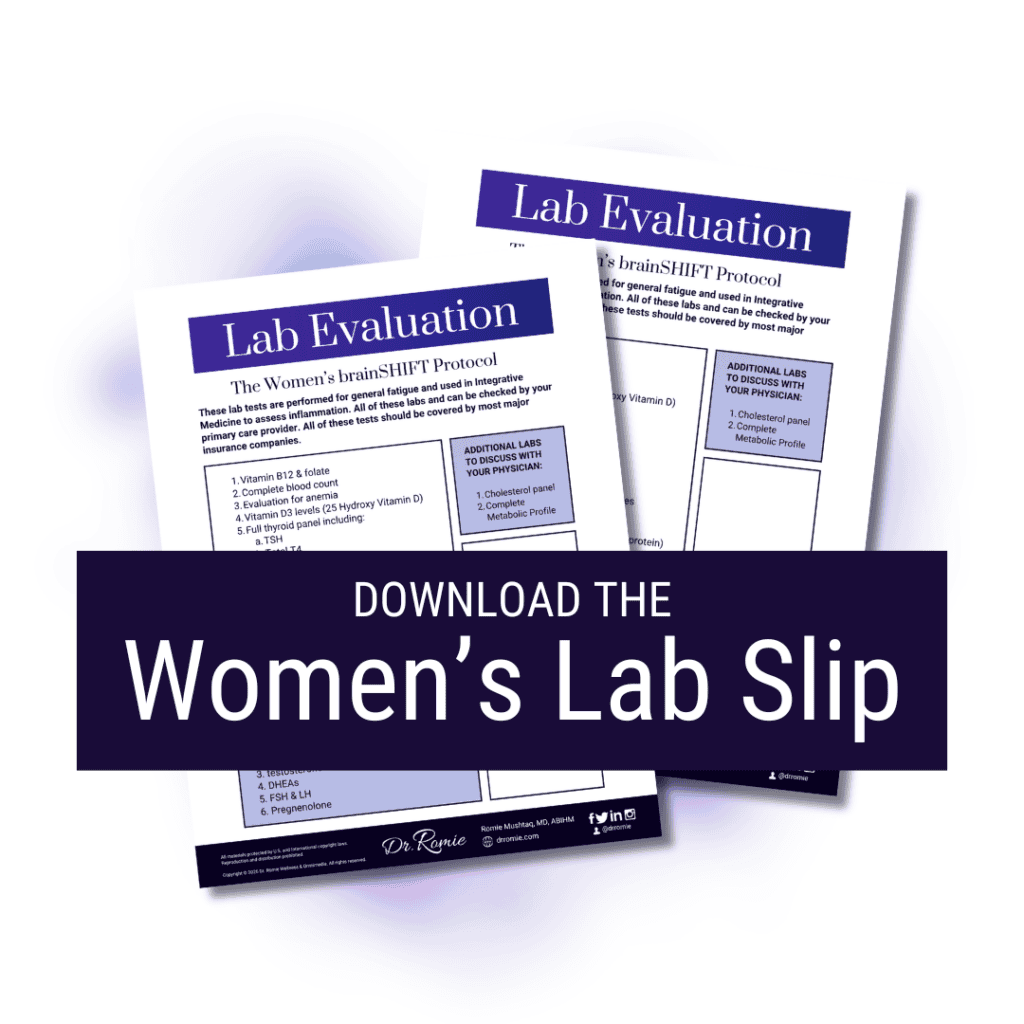
Step 2: Know Your Score. Download the Lab Slip for Your Doctor. Chapter 16 of The Busy Brain Cure includes a complete list of labs to request at your next appointment. Download the lab slip, print it out, and bring it with you. Download the Lab Slip here.
Step 3: Follow the 8-Step, 8-Week brainSHIFT Protocol The full protocol is laid out in The Busy Brain Cure, published by HarperCollins. It is the same research-backed plan I have used with thousands of women across organizations, from the C-suite to the frontline. Get the book on Amazon here.

The foundation of a regulated woman’s brain is hormones.
Dr. Romie Mushtaq, The Busy Brain Cure
Secondary support, in order of importance: sleep, Vitamin D levels, gut health, and nutrition.
That quote is from The Busy Brain Cure, and I mean every word of it. Not supplements. Not gadgets. Not overpriced undergarments that cut off your circulation. Hormones first. Everything else follows.
Here is what that means in practice.
Your Questions Answered: The Science Behind Women’s Hormonal Health and Brain Performance
Why did doctors spend decades scaring women away from hormones, and why are they reversing course now?
The short answer is that the science was wrong, and women fought to fix it. In 2002, the Women’s Health Initiative study made headlines claiming hormone therapy caused breast cancer and heart disease, and an entire generation of physicians stopped prescribing it overnight. Our mothers and grandmothers were taken off hormones abruptly, left to suffer, and told it was for their own protection. What we now know is that the WHI study had serious design flaws. It used synthetic hormones, studied women who were already a decade or more past menopause, and drew conclusions that did not apply to the women who needed hormone therapy most. Over the past two decades, researchers, physicians, and women’s health advocates pushed back hard, funded better research, and demanded a more honest reading of the data. The Menopause Society, formerly known as NAMS, has since clarified that hormone therapy is safe and appropriate for most healthy women under 60 who are within ten years of their last menstrual period. The science did not change overnight. Women changed the narrative, and the science finally caught up.

How do chronic stress, Busy Brain, and burnout cause hormone disruption?
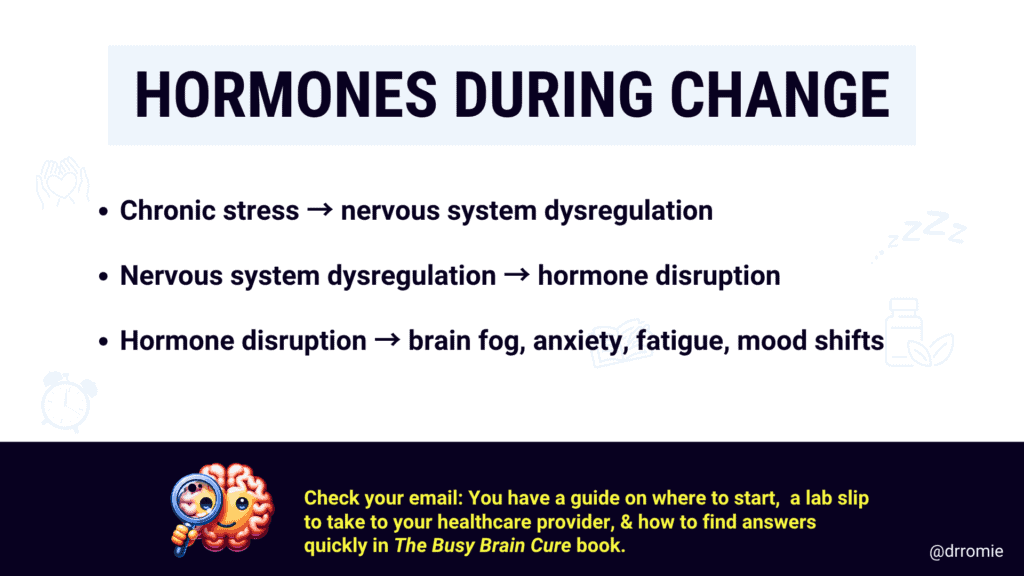
Chronic stress does not just make you feel overwhelmed. It triggers a cascade inside your nervous system that directly disrupts your hormonal balance. When your nervous system stays in a dysregulated state for weeks or months, your body begins diverting resources away from hormone production and toward survival. The result is what I call the Busy Brain, and if your score is above 40 on the Busy Brain Test, your hormones are almost certainly caught in this cycle. Brain fog, anxiety, fatigue, and mood shifts are not character flaws or signs of weakness. They are the biological consequence of hormone disruption driven by chronic stress. In The Busy Brain Cure, I walk through the full research behind this cascade and exactly how to interrupt it.
Why are wellness influencers pushing supplements, gadgets, and special diets instead of telling women to talk to their doctor about hormones?
Because they cannot prescribe hormones, and they know it. Many of the loudest voices in the women’s wellness space, the ones selling you adaptogens, expensive supplement stacks, infrared saunas, hormone-balancing meal plans, and beauty creams with clinical-sounding names, are not physicians. They do not have the training or the license to evaluate your hormone levels, interpret a lab panel, or prescribe bioidentical or conventional hormone therapy. So instead, they capitalize on the fear that the WHI study created and offer you something they can sell. I want to be direct with you: no supplement can replace estrogen. No gadget can restore progesterone. No diet will correct a clinical testosterone deficiency. These products are not harmful because they contain dangerous ingredients. They are harmful because they delay the real conversation with a real doctor who can actually help you. Your money and your time deserve better than that.
Can I try supplements, diet, or strength training before hormone therapy?
No. I know that is not what the wellness industry wants you to hear, but it is what the science supports. The foundation of a regulated woman’s brain is hormones, and secondary support, including sleep optimization, Vitamin D, gut health, and nutrition, only works effectively once the hormonal foundation is in place. Supplements, adaptogens, and resistance training all have a role in the brainSHIFT protocol, but they cannot compensate for a hormonal deficit. Trying to out-supplement a progesterone or estrogen deficiency is like trying to renovate a house with a cracked foundation. Start with the foundation.
What symptoms show up with thyroid hormone abnormalities?
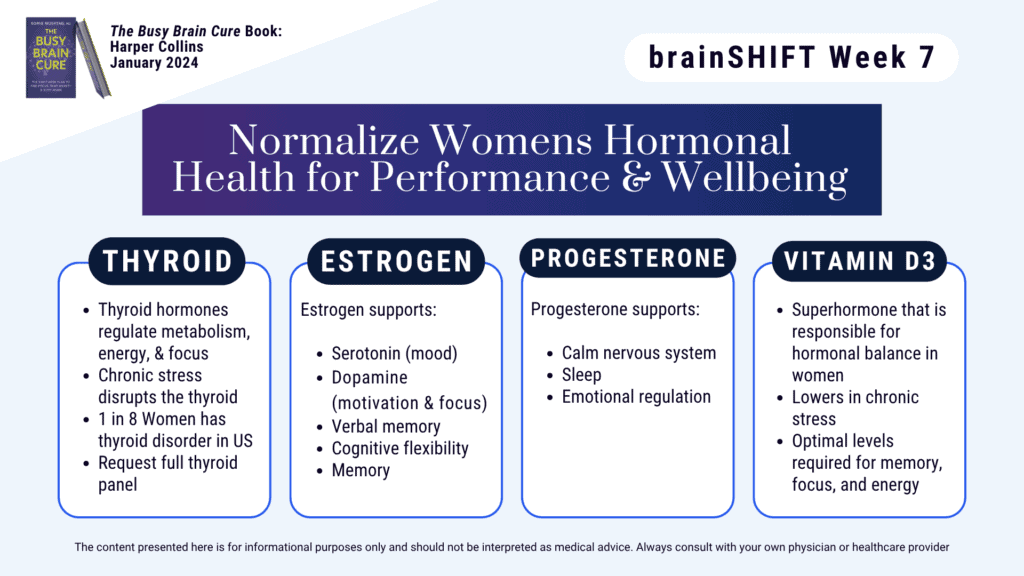
Thyroid hormones regulate your metabolism, energy, and focus, which means thyroid dysfunction touches nearly every system women leaders rely on daily. Symptoms of thyroid imbalance include unexplained weight changes, crushing fatigue even after a full night of sleep, brain fog, difficulty concentrating, hair thinning, feeling cold when others are comfortable, and a general sense that your body is running in slow motion. What is critical to understand is that chronic stress directly disrupts thyroid function, and 1 in 8 women in the United States will develop a thyroid disorder in her lifetime. A standard TSH test is not enough. Always request a full thyroid panel, and if your doctor resists, that is a conversation worth pushing.
What symptoms show up with low progesterone, and how does it affect brain and mental health?
Progesterone is the brain’s natural calming hormone. It supports a calm nervous system, restores deep sleep, and regulates emotional responses. When progesterone drops, as it does during perimenopause and under chronic stress, women often experience racing thoughts at night, difficulty falling or staying asleep, heightened anxiety, irritability, and a feeling of emotional fragility that does not match their circumstances. Many women in this state are prescribed antidepressants or sleep medications when the actual driver is a progesterone deficiency that has never been tested. This is one of the most consequential missed diagnoses in women’s medicine, and it is why I insist on a complete hormone panel as a baseline, not an afterthought.
What symptoms show up with low estrogen, and how does it affect brain and mental health?
Estrogen is far more than a reproductive hormone. It directly supports the production of serotonin, which governs mood, and dopamine, which drives motivation and focus. It also protects verbal memory, cognitive flexibility, and overall mental processing speed. When estrogen declines, women notice a kind of cognitive flatness: words that used to come easily no longer surface quickly, multitasking feels harder, motivation dips, and mood becomes unpredictable. These are not signs of aging or burnout. They are signs of an estrogen shift that your brain is working hard to adapt to. Understanding this distinction is the first step toward getting the right support.
What is the role of Vitamin D3 in hormone balance and women’s brain health?
Vitamin D3 is not a vitamin in the traditional sense. It functions as a superhormone, and it is one of the most critical regulators of hormonal balance in women. Optimal Vitamin D3 levels are required for memory, focus, and sustained energy, and yet deficiency is extraordinarily common, particularly in women who work long hours indoors. Chronic stress actively depletes Vitamin D3, which means the very women who need it most are the ones most likely to be running low. I include Vitamin D3 testing in the lab panel in Chapter 16 of The Busy Brain Cure because it is one of the few interventions that is low-risk, measurable, and makes a meaningful difference in brain performance relatively quickly.
What do I do if my doctor says my labs are “normal”?
This is one of the most common and most frustrating situations I hear from women. “Normal” on a standard lab panel does not mean optimal, and it does not mean your symptoms are not real. Standard reference ranges are built on population averages, not on what your individual brain and body need to perform at their best. If your labs come back “normal” but you are still experiencing brain fog, sleep disruption, mood instability, fatigue, or a decline in focus, advocate clearly and directly: tell your doctor you are asking for a complete evaluation of your symptoms, not just a comparison to a population average. Ask specifically about hormone therapy as a treatment option. If your doctor is not willing to have that conversation, it may be time to find one who is trained to.
What is the role of testosterone in women’s focus and mental performance?
Testosterone is not just a male hormone. In women, testosterone plays a direct role in focus, mental drive, confidence, and cognitive sharpness. Women produce testosterone in smaller amounts than men, but those amounts matter enormously for brain performance. As testosterone declines with age and stress, women often notice a drop in motivation, a reduction in competitive drive, and a kind of mental flatness that is hard to name but impossible to ignore. Testing testosterone as part of a complete hormone panel, alongside estradiol and progesterone, gives you a complete picture of what your brain is actually working with. This is standard practice in my protocol and in the lab list included in Chapter 16 of The Busy Brain Cure.
How do I find the right doctor for hormonal health?
In most cases, your primary care physician is not the right starting point for this conversation. Hormonal health in women, particularly perimenopause and menopause-related concerns, requires specialized training that most PCPs do not have. Look for a physician who is certified by the Menopause Society, as this credential indicates dedicated training in hormonal health across the full arc of women’s lives. If access to a specialist is a barrier, telehealth platforms including Midi Health, Alloy, and One Medical have providers with specific expertise in women’s hormonal health and can be a strong starting point. You deserve a physician who takes your symptoms seriously and is willing to look at the full picture.
Can Dr. Romie come speak to the women at our company about hormonal health?
Yes. I speak to organizations on hormonal health across every stage and age of a woman’s career, from the early signs of thyroid dysfunction in your 30s to perimenopause and menopause in the peak years of leadership. This is not a wellness perk. It is a business strategy. When women understand what is happening in their brains and bodies, they lead better, stay longer, and perform at a level that benefits the entire organization. If you are ready to bring this conversation to your team, I would love to talk. Book Dr. Romie to speak at your organization
“The foundation of a regulated woman’s brain is hormone therapy. Secondary support in order of importance: sleep, Vitamin D levels, gut health, and nutrition.”
— Dr. Romie Mushtaq, The Busy Brain Cure
Ready to Take the Next Step?
Take the Busy Brain Test to find your score. https://drromie.com/womens-bbt/
Download the lab slip from Chapter 16 of The Busy Brain Cure and bring it to your next appointment. https://drromie.com/get-your-lab-slip/
Get the book and start the 8-week brainSHIFT protocol. http://amazon.com/Busy-Brain-Cure-Eight-Week-Anxiety/dp/1335007113
Your brain is not broken. It is asking for the right support. Let’s get you there.
This content is for informational and educational purposes only and does not constitute medical advice. Always consult your physician or a qualified healthcare provider before making any changes to your treatment plan.